Use Case on Overcoming Healthcare Data Scarcity and Compliance with B2B Data

Listen to audio summary of this article
Navigating B2B marketing requires capturing the attention of highly specialised decision-makers.
Today, buyers are overwhelmed with generic outreach, while marketers face two distinct pressures: finding genuinely relevant prospects to sustain conversion rates and ensuring ironclad data compliance under tightening regional regulations.
When you are selling a highly technical product into a complex, tightly regulated sector like healthcare, standard database tools quickly break down.
To help clarify the specific data roadblocks your team should be auditing, let’s look at a real-world case study of an advanced medical tech provider that moved past automated data volume in favor of human-led precision.
The Real-World Data Challenge
The company in this case is a mid-market manufacturer of specialised, AI-driven diagnostic imaging hardware and software solutions designed for oncology and radiology departments.
Their growth strategy depends on breaking into two highly lucrative but notoriously opaque networks: the National Health Service (NHS) Trusts in the United Kingdom and prominent private hospital networks across the DACH (Germany, Austria, Switzerland) region.
To jumpstart their demand generation, their marketing operations team did what most businesses do: they purchased a license for a leading, automated B2B subscription database.
They pulled a massive list of roughly 20,000 records across Western Europe, filtering for broad parameters like "Healthcare Executives" and "Hospital Administration." They had a substantial list of contacts, an expensive enterprise CRM setup (using HubSpot and Salesforce), and weeks' worth of clinically focused marketing copy ready to deploy.
The Breakdowns in the Pipeline
When the campaign went live, the automated database completely failed to convert. The client's growth team quickly ran into four critical operational barriers:
Extreme Data Decay & Misclassifications: The automated database’s scraping algorithms couldn't interpret complex hospital hierarchies. It mixed up frontline nursing staff or general administrative clerks with actual clinical decision-makers and targeted physicians who had left those hospital networks months prior.
The "Catch-All" Gatekeeper Wall: Over 70% of the scraped contact records featured generic, centralised hospital mailboxes (such as info@nhs.net or procurement@hospitalgroup.com) rather than direct contact lines. Their personalised marketing assets stalled at the administrative gatekeeper level.
Severe Domain Reputation Damage: Because the automated lists were riddled with unverified and expired email addresses, the campaign hit a hard bounce rate above 14%. Major enterprise email firewalls flagged their corporate sending domain, causing even their day-to-day business emails to land in spam folders.
Complex, Non-Standard Job Roles: The client didn't need general managers. They needed to reach very specific buying committees—including Clinical Directors of Radiology, Chief Medical Information Officers (CMIOs), and Procurement Leads for Specialised Diagnostic Capital Equipment. These unique, highly nuanced titles do not exist in standard database dropdown menus.
The Solution: A Custom Partnership Grounded in Human Intelligence
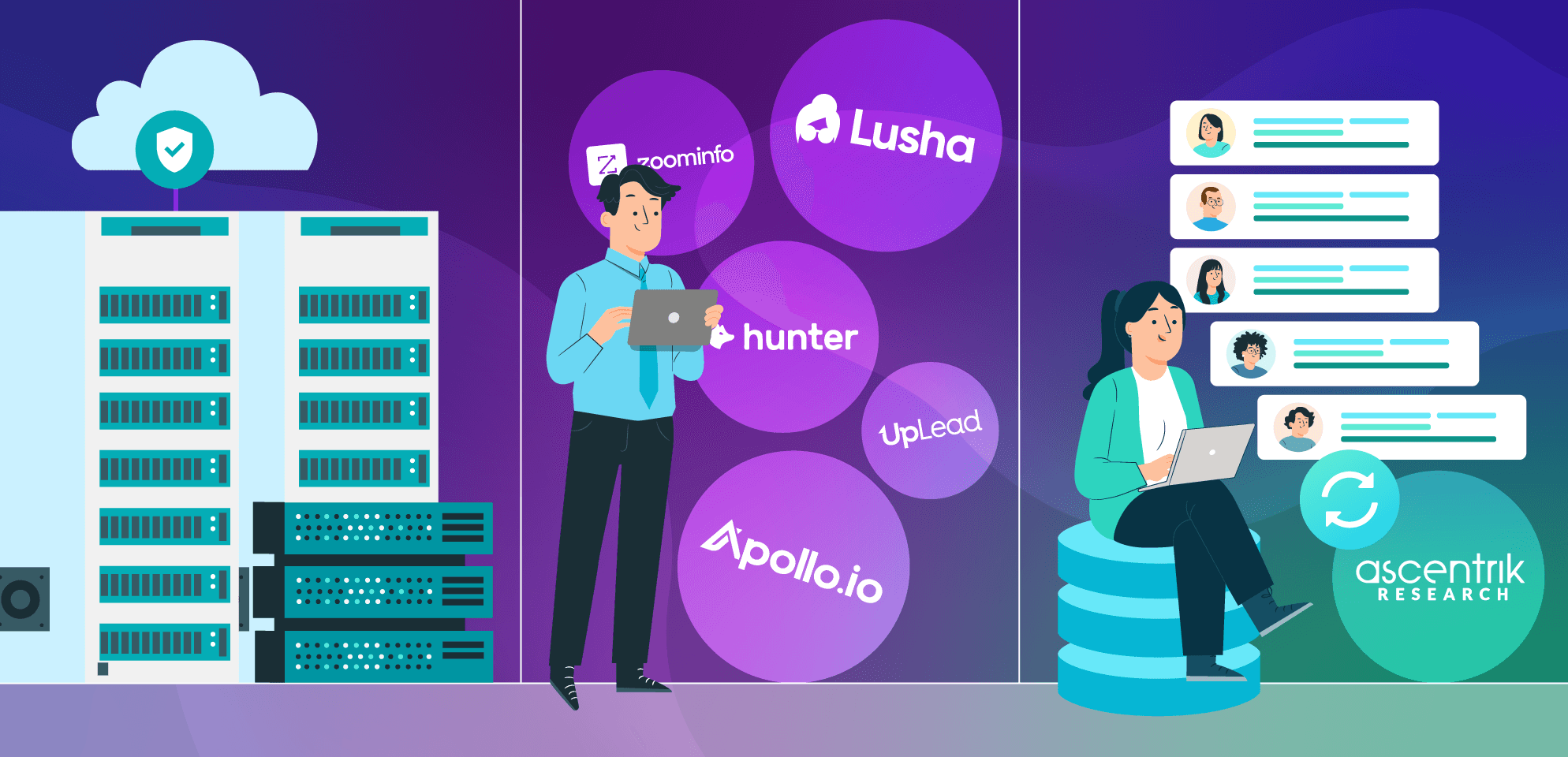
Recognising that automated software platforms could not map the internal hierarchies of modern medical institutions, the client paused their automated tools and partnered with Ascentrik Research, a bespoke B2B data research firm to build an authentic, compliant market intelligence foundation from scratch.
The research team executed a multi-layered, human-in-the-loop strategy:
1. The Database Cleansing and Audit
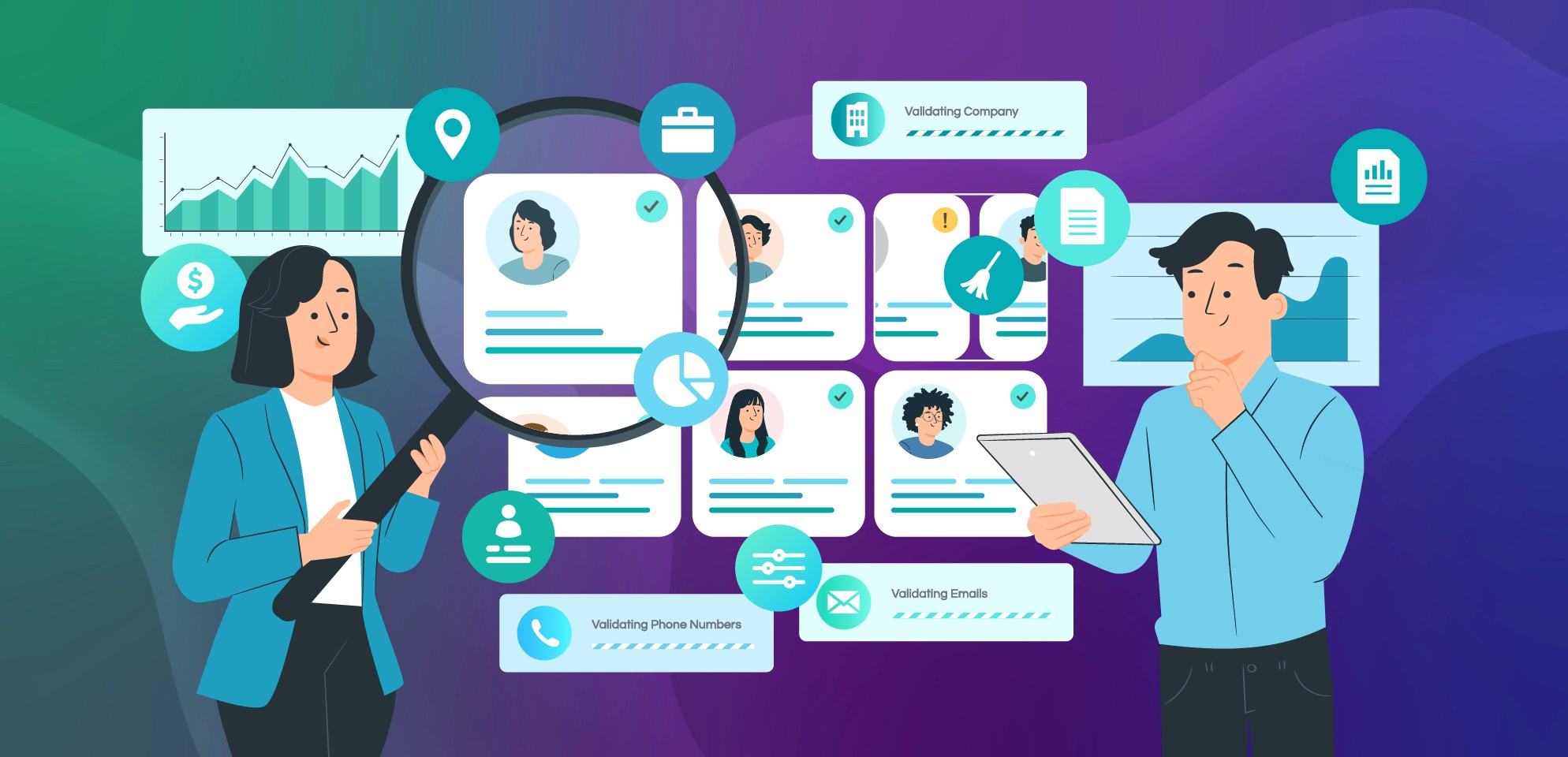
Analysts first audited the client’s existing CRM setup. They ran a deep diagnostic that isolated the systemic gaps and purged the inaccurate records, revealing that 42% of their pre-packaged subscription database was completely obsolete or structurally misaligned with their Ideal Customer Profile (ICP).
2. Manual Registry Triangulation
Moving completely away from automated web scrapers, a dedicated team of full-time healthcare sector researchers manually mapped the target accounts. They cross-referenced regional medical directories, national clinical trial registries, state-level healthcare tender portals, and official NHS Trust organizational frameworks line by line.
3. Granular Segmentation & Enrichment
Instead of utilising broad, useless "Healthcare" tags, the researchers segmented institutions by exact variables that dictate buying power:
Hospital Type: Separating University Research Hospitals from Regional Public Clinics and Private Multi-Facility Groups.
Capacity Indicators: Appending active bed counts, annual patient volume estimates, and the exact models of specialized imaging machines currently deployed at each site.
The Decision-Making Matrix: Sourcing direct, human-verified corporate email addresses and direct-dial office numbers for the precise medical directors holding purchasing authority.
4. Native CRM Ingestion and Consent Mapping
To address strict regional privacy rules like GDPR, researchers manually verified every single contact record, ensuring clean data lineage and verifiable opt-in tracking. Finally, data engineers mapped these custom fields directly into the client’s internal HubSpot and Salesforce configurations, pre-sorting the contacts by sub-specialty, facility size, and precise region.
The Strategic Outcome
The shift from volatile, machine-scraped data to an agile, human-verified custom data partnership completely transformed the client’s go-to-market performance:
Deliverability Recovery: The email hard bounce rate plummeted from over 14% to less than 0.8%, successfully restoring their domain authority and bypassing strict enterprise spam filters.
Pipeline Engagement: Email open rates across their Tier-1 target hospital accounts increased by 310%, while click-through rates on their technical product white papers tripled.
Sales Efficiency: Sales Development Representatives (SDRs) completely eliminated manual data cleaning from their daily tasks. Armed with direct dials and accurate clinical titles, their booking rate for product demonstrations increased by 45% quarter-over-quarter.
Sustainable Quality: Through continuous, human-led maintenance loops, the client's internal database remains protected against rapid healthcare industry turnover, turning their CRM into a compliant pipeline engine.
Conclusion: Lessons for Your Growth Engine
If your marketing and sales teams are struggling with low conversion rates, falling deliverability, or compliance anxieties, the root cause is rarely your messaging or your product—it is the structural integrity of your database.
You cannot execute a precise, modern B2B strategy using generic, commodity data harvested by bots. To win high-value accounts in complex markets, your data infrastructure requires precision-engineered, bespoke research that turns raw contact fields into actionable business intelligence.