The Strategic Cost of B2B Contact Databases: Premium Data Research and List Builders
Listen to audio summary of this article
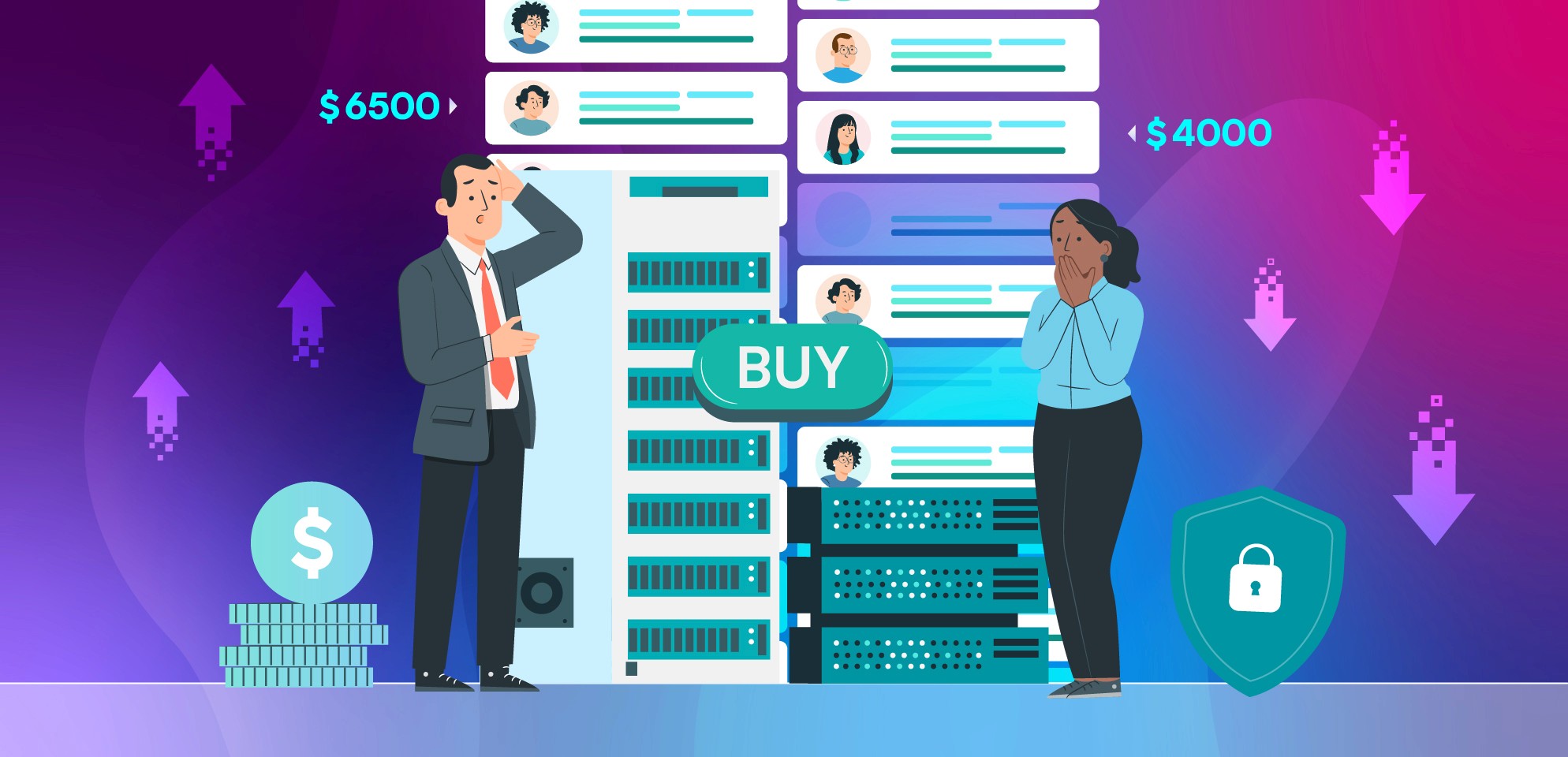
When you’re a business leader close to making a B2B data purchasing decision, it’s easy to get caught up in comparing price-per-contact metrics.
The market makes it look simple: on one side, you have low-priced automated tools promising instant, massive databases; on the other, you have premium data partners offering custom, human-researched lists.
If you look at it purely as a software expense, the premium route can feel overpriced. But evaluating data solely on its upfront price ignores the hidden, downstream traps that can quietly drain your corporate revenue.
1. The Short-Term Pitfall: Bulk Data Costs More in Lost Pipeline
Bulk data list builders operate on automated web scraping and programmatic data aggregation.
Industry research shows that B2B data naturally decays at a rate of roughly 2.1% per month, or over 22% annually, as professionals switch jobs, domains migrate, and companies restructure.
When you buy bulk data, you are buying into this decay. The immediate consequence to your short-term marketing and sales campaigns includes:
High Bounce Rates: Automated tools often feature bounce rates exceeding 5% to 10%. In modern outbound infrastructure, a bounce rate above 2% is a critical failure that signals to internet service providers (ISPs) that you are running unverified spam campaigns.
Low Open and Engagement Rates: Programmatic scraping frequently pairs names with completely incorrect or outdated email addresses. Your outreach lands in dead, unmonitored inboxes, leaving your campaigns underperforming against baseline benchmarks.
Wasted Sales Labor: When an Account Executive or Sales Development Representative (SDR) spends their highly compensated hours chasing a lead, only to find the phone number is disconnected or the contact left the company six months ago, corporate capital is actively wasted.
When you calculate the all-in cost—factoring in the hours your team wastes sorting through bad lists and the subscription costs of external email validation software—cheap data quickly becomes the most expensive option on your balance sheet.
2. The Long-Term Catastrophe: Brand Reputation and Domain Demolition
While the short-term impact of syndicated data ruins quarterly campaign metrics, the long-term impact can permanently cripple an enterprise's go-to-market infrastructure.
Through 2025 and into 2026, major email clients like Google and Microsoft have steadily tightened their automated spam-filtering algorithms.
Bulk cold outreach is scrutinised with unprecedented severity. When your sales team utilises a low-priced list filled with stale contacts, unverified catch-all emails, and hidden spam traps, your domain reputation faces catastrophic damage.
The Lifecycle of Domain Destruction:
Infrastructure Blacklisting: High bounce rates trigger immediate penalties from ISPs, landing your corporate sending domains on global blacklists (such as Spamhaus or Barracuda).
Inbox Suppression: Once blacklisted, your emails bypass the prospect's primary inbox entirely, routing directly to the spam folder. This suppression doesn't just impact cold sales outreach; it cascades to your critical operational corporate emails, client updates, and marketing newsletters.
Re-building Expenses: Recovering from domain demolition requires thousands of dollars in technical overhead—purchasing replacement domains, setting up complex Google Workspace/Microsoft 365 routing architectures, and waiting months for custom domain "warm-up" protocols to take effect.
A premium price point protects your brand from this spiral. When you pay for premium data research, you are paying for structural safety insurance that keeps your primary digital channels functional and highly authoritative.
3. Premium B2B Data Cost: What Is the Research Actually Worth?
The premium pricing model offered by a dedicated data partner like Ascentrik Research is directly tied to the intensive operational labor required to construct a custom, high-impact asset.
You are not paying a software vendor for a login; you are investing in dedicated human infrastructure designed to protect your pipeline.
Humans-in-the-Loop Verification
Unlike automated tools that rely on programmatic estimation, premium data research utilises a Humans-in-the-loop research methodology. A full-time team of expert researchers manually cross-references, and validates every single record exclusively for your specific project right before delivery.
This human layer confirms that the individual is still active in their role, verifies their company phone number, and checks their corporate email against real-time server handshakes.
By shifting the verification from an automated machine to a human researcher, the baseline bounce rate drops under 1% to 2%, completely insulating your domain reputation.
Granular ICP Mapping and Precision Targeting
Standard SaaS list builders utilise rigid drop-down filters (e.g., Industry: Healthcare, Title: Manager). This forces you to execute broad campaigns targeting the same public profiles your competitors are hitting.
Premium data partners construct your list using Granular ICP Mapping. If your campaign requires hyper-specific niche market sourcing—such as "Head of Clinical Operations at Mid-Sized Lifesciences Firms evaluating AI-driven supply chains across EMEA"—a human team can map that specific ecosystem.
This degree of custom target precision yields unmatched relevance, resulting in highly productive sales conversations and exceptional reply rates.
Strict Global Compliance and Double Opt-In Data
In the modern regulatory landscape, a compliance failure can result in ruinous financial penalties under GDPR, CCPA, and evolving global privacy frameworks. Low-priced list tools frequently ignore origin consent, scraping public data indiscriminately.
Premium data research builds compliance into the pricing structure. A dedicated partner allows you to strategically dictate the consent levels required for your business model. You can choose rapid list scaling through single opt-ins or request the premium standard of double opt-ins—guaranteeing explicit consent from prospects who are genuinely receptive to communication.
4. Financial Architecture: List Builders vs. Premium Partnerships
To fully evaluate this buying decision, a financial leader must compare the underlying structural mechanics of how these two distinct marketplace systems are priced:
Pricing Component | Low-Priced List Builder Tools | Premium Custom Data Partners (Ascentrik) |
|---|---|---|
Billing Foundation | Credit-wallet subscriptions / Annual seat licenses | Pay-per-lead / Made-to-order project quotes |
Data Quality Baseline | Static, pre-scraped machine databases with 20%+ decay | Built from the ground up per project right before delivery |
Hidden Expenses | Overage fees, data-cleaning tools, seat licenses, domain repairs | None. All-inclusive human verification and research |
Waste Protection | Deducts credits for bad data; "Use-it-or-lose-it" expiration | Charges only for validated, delivered records |
Freshness Guarantee | No individual guarantees for specific job shifts | 100% Data Replacement Guarantee for bounces |
Strategic Focus | High-volume, untargeted, low-converting bulk lists | High-value, hyper-targeted, high-ROI pipeline assets |
The Ultimate Decision: Prioritising Value for Money Over Low Cost
When you stand close to a B2B data purchasing decision, look past the initial price-per-lead metrics. A lower sticker price is an illusion if half the data never reaches a valid inbox, and the other half alienates your sales team with incorrect corporate context.
Generic database tools are simply not sufficient anymore for enterprises serious about driving predictable revenue. The premium pricing of custom data research is an investment in strategic certainty.
By choosing a data partner like Ascentrik Research who focuses on custom contact databases with bespoke research, you secure structural accuracy, guaranteed compliance, and absolute exclusivity. You stop wasting your sales budget on dead credits and start building an exclusive revenue engine backed by precision human intelligence.
Table of Content