Double Opt-In During Enrichment: An Optional Layer of Trust

Listen to audio summary of this article
Most double opt-in advice online is written for one scenario: someone fills out a form, and a confirmation email locks in their subscription before they’re added to a list. That’s useful, but it’s a different moment from what happens during data enrichment — when an existing or newly sourced B2B record gets appended with new information, verified, and prepared for a campaign.
Let’s look at the value of adding a layer of double opt-in to your data during enrichment cycles, and not just reserving it for the initial list-building process.
Why Consent during Enrichment is a Different Question
Under GDPR, most B2B prospecting and enrichment activity doesn’t legally require consent at all. The standard legal basis is “legitimate interest” provided the outreach is professionally relevant, the data source is transparent, and an easy opt-out is offered, businesses can enrich and use professional contact data without collecting a prior opt-in.
This is the position reflected across current GDPR guidance for B2B activity, and it’s the basis most data providers and enrichment tools operate on by default.
That matters because it means double opt-in on enriched data isn’t filling a legal gap in most cases — it’s an additional layer of certainty that goes beyond what the law requires.
Some regulators and national data protection authorities do take a stricter view than the EU baseline (Germany’s DSK, for instance, applies tighter scrutiny than most other EU member states, and Poland typically expects consent even for B2B outreach), which is one of the reasons some clients choose to request it.
But as a standard practice, it’s not something applied to every enriched record by default — it’s an add-on service clients can opt into when their situation calls for it.
When Double Opt-in on Enriched Data is worth Requesting
A few situations tend to make this add-on genuinely useful rather than just extra friction:
Campaigns targeting EU markets with stricter national interpretations of GDPR, where an extra layer of documented consent reduces exposure even though it isn’t universally mandated.
High-value ABM campaigns, where the list is small and the cost of a bad send (reputational or otherwise) outweighs the cost of a slower ramp-up.
Regulated industries — financial services, healthcare-adjacent B2B, legal — where compliance teams often want documentation beyond the legal minimum.
Data feeding a DaaS platform or AI-powered product, where the enriched record isn’t just used once internally but is redistributed to subscribers or acted on by an agent, raising the bar for defensible consent.
Re-engagement campaigns on older, previously enriched lists, where a fresh confirmation doubles as both a compliance signal and a natural way to filter out contacts who are no longer reachable or interested.
For high-volume, mainstream outbound prospecting where legitimate interest already applies cleanly, most clients don’t need this layer — it would only slow down a process that’s already compliant.
That’s exactly why it works best as something requested for a specific campaign or segment, not applied uniformly across every enriched record by default.
What Double Opt-in Actually Changes in the Data
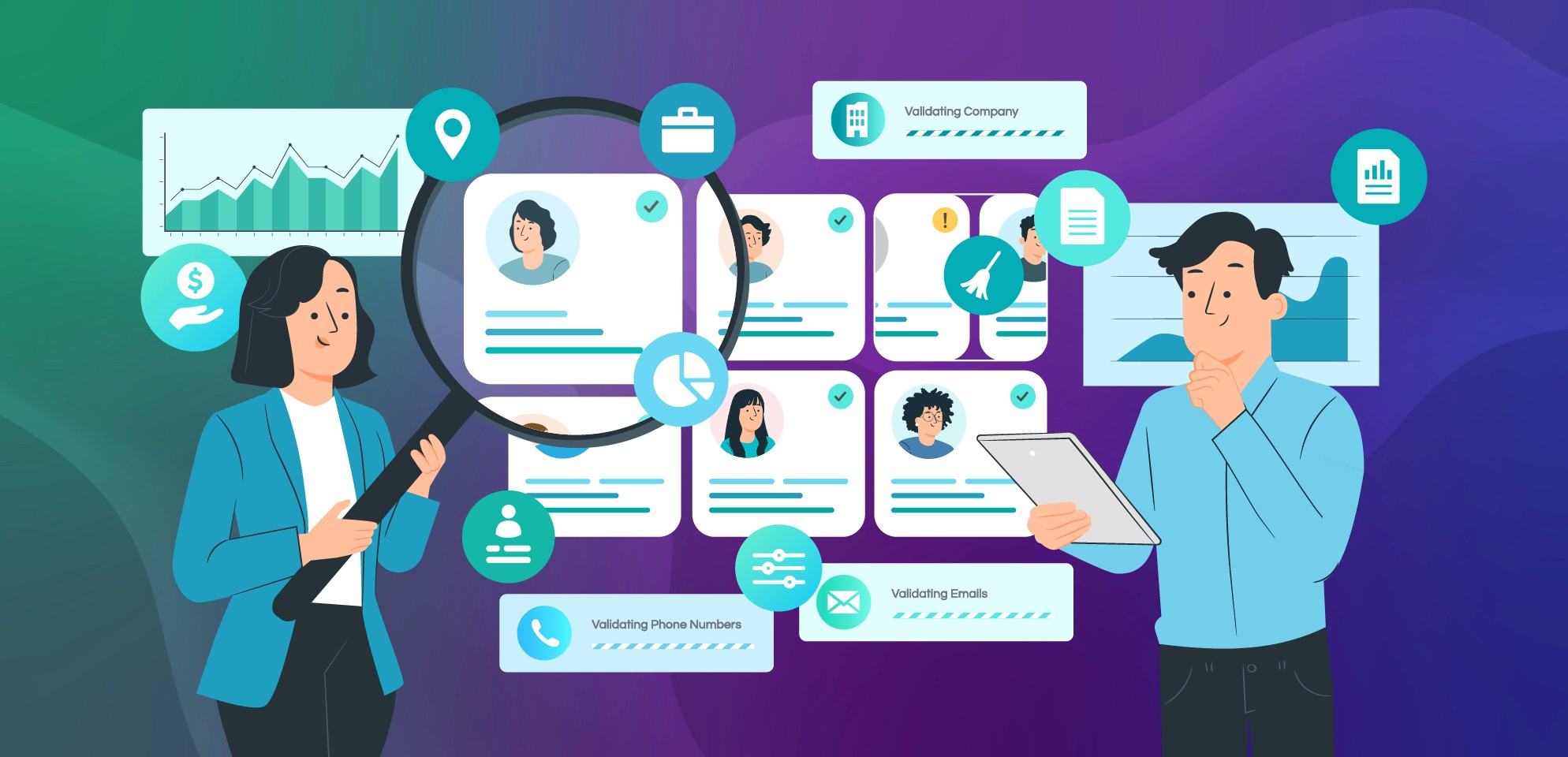
When it is requested, the mechanism during enrichment differs slightly from the list-building version. Rather than confirming a brand-new signup, the confirmation step re-validates a record that’s just been appended or corrected — new email format, updated job title, a newly sourced direct line — before it enters an active campaign. The person confirms not just that the address is theirs, but implicitly that the enriched details are current.
The deliverability data backs up why this is worth the friction when it’s used. Lists built through double opt-in consistently report bounce rates under 1%, compared to the 3–7% range common on single opt-in or unverified lists.
One widely cited Mailchimp study of 30,000 users found double opt-in groups saw 72% more unique opens, 114% more clicks, and 48% fewer bounces than single opt-in groups. For B2B specifically, confirmation rates when the flow is done well — clear subject line, immediate delivery, obvious call to action — typically land in the 60–75% range, and well-executed flows have reported confirmation rates as high as 96%.
The trade-off is real: double opt-in typically reduces immediate list size by 20–30% compared to single opt-in, because not everyone completes the confirmation step. That’s precisely why it functions best as an opt-in add-on for specific, higher-stakes segments rather than a blanket policy — the friction is worth absorbing when the value of certainty is high, and unnecessary when it isn’t.
What this Looks like as a Service
Framed as an add-on, double opt-in during enrichment works best as something a client requests for a specific list, campaign, or market rather than something baked into every enrichment engagement. In practice, that looks like:
Standard enrichment — records are sourced, cleansed, appended, and verified against current sources under the legitimate-interest basis that governs most B2B outreach. This covers the large majority of use cases.
Double opt-in enrichment (optional) — for a specific segment the client flags (a target EU market, a compliance-sensitive vertical, a high-value ABM list, or data feeding an external product), a confirmation step is added before the enriched record becomes campaign-active.
This keeps the base service fast and unencumbered for the majority of use cases, while giving clients a documented, higher-trust option exactly where they decide the stakes justify it — rather than treating every record as if it needed the same level of caution.
FAQ
Is double opt-in required by GDPR for B2B enrichment?
No. Most B2B prospecting and enrichment is legally covered by legitimate interest under GDPR provided the outreach is professionally relevant, the data source is transparent, and an opt-out is offered. Double opt-in goes beyond this legal baseline rather than filling a gap in it.
Does double opt-in apply automatically to enriched records?
No — it’s typically offered as an optional add-on for specific segments or campaigns a client requests, such as compliance-sensitive markets, high-value ABM lists, or data feeding an external product, rather than applied by default to every enriched record.
What’s the real cost of adding a double opt-in step to enrichment?
The main cost is list size and speed — confirmation rates for B2B typically run 60–75% (higher with a well-designed flow), meaning some records won’t convert to active status immediately. The trade-off is a meaningfully lower bounce rate and higher engagement on the records that do confirm, which is why it’s worth requesting selectively rather than universally.